Wednesday, February 4, 2015

Oral Presentation Genre: Breaking Bad

I chose the film series "Breaking Bad" by Vince Gilligan for my oral presentation. The series is about a high school chemistry teacher who is diagnosed with terminal lung cancer. On the verge of being bankrupt with a baby on the way, the main character "Walter White" becomes inspired to join the drug underground and "cook" the purest crystal meth. This series takes numerous twists and turns, opening possibility for the classification of multiple genres. Generally, I would consider the series under the genre of "thriller."

The Thriller genre is consists of filmic elements that cause suspense or "on edge" feelings. Thriller genre is not to be confused with Horror. One of the first Thriller films was Harold Lloyd's Safety Last (1923). This film came out post-WWI and the Great Depression had recently begun, which obviously had a lot of influence on the film's narrative.

An common and important element in Thriller films is time. Time is important because it creates suspense in the sense that there is a countdown leading up to something. Time plays a big role in the series Breaking Bad because Walter is given a countdown on how long he has left to live. In the end, everything Walter White had done was for his family so that they would be financially stable after he was gone.

Monday, January 26, 2015

Mise-En-Scene Analysis of “American Beauty”

Mise-en-Scene Analysis

1) In the clip from American Beauty, what cinematic techniques are used to define the characters What meaning is derived from these techniques?
Everything looks so balanced within the frame in the shots when they play through the main character's dally routine to show off a "perfect" life. For example, the scene when the main character and his family are sitting at the table for dinner. In a wide shot, the camera faces the table lengthwise with each family member in each third of the frame. There is candles on each side of the table that match each other on the opposite halves of the frame. This is done in order to send a sarcastic message to the audience about his perfect looking life not so being purpose. This is also accomplished by the main character's "empty" or "bland" attitude throughout each scene of his daily routine. These techniques spark numerous ideas for the audience to guess the thoughts of the main character. I assume from his attitude towards his life that he is bored and upset with having a plain life with no more excitement. Humorously, he is suffering from a "mid-life crisis. You can tell the main character feels trapped by his lifestyle and is waiting for something to rise within him to make life exciting again.

2) How do the cinematic techniques change in the scene after Lester has decided to take control of his life?
The main character, Lester, begins to take more up of the frame. The scenes become less gloomy and seem to have more vibrance and life. The scenes are framed to be more  appealing to the eye and half more of a natural balance rather than sharp shapes in the shots. The facial expressions on the main character seem more relaxed and optimistic toward life. He literally says he, "doesn't care cause I [he] am a middle aged man who has got nothing to lose."

3) Now watch the clip from the Matrix. What cinematic techniques do you notice? How do these techniques create meaning? Compare and contrast the techniques used with Neo and the Agents.  
They use a lot of low angles in this clip. Most of the shots in this scene are very tight on Neo and he takes up a good portion of the frame. There is a lot of sequence shots and they build suspense for the audience. The cutting between shots is sped up when Neo is sneaking around the cubicles to the office. Once Neo is on the ledge, the shots become tight in and from a high angle and makes Neo look smaller and submissive to men who have basically trapped him.

Tuesday, October 21, 2014

3 Beat Sheets: 3 Films

The Godfather
Opening Image(1): A CU man's face dimly lit, slowly tracking tracking out. 
Theme Stated (5): Respect is valued more than friendship or justice.
Set-up (1-10): Establishes the Don, his family and members of his mafia that will play a role further on in the film. It also establishes the idea of organized crime that drives the storyline.
Catalyst (12): A man who has affiliation with the Tatalias wants to financial support for the narcotics business from the Corleons but the don refuses his offer. Then the Tatalias try to assassinate the don.
Debate (12-25): The Tatalias want Tom Hagen to make peace between the Corleons and Tatalias because they needed the business after the supposed death of Don Corleon. The Corleons begin to plot the next moves.
Break into Two (25): Michael begins to take control of the family while the Don is recovering in the hospital.
B Story (30): Michael and his girlfriend are slowly fading away from each other because of his involvement with his family business.
Fun and Games (30-55): Where Michael kills Solazo and the Tatalia boss in the restaurant.
Midpoint (55): Michael kills Solazo and the Tatalia boss then has to move to Italy to hide away for awhile.
Bad Guys Close In (55-75): The Tatalias kill Sonny and inflame the rivalry between the Corleons and the Tatalias.
All Is Lost (75): There seems to be peace after the death of Solazo and the police chief as organized crime throughout the city becomes low key.
Finale (85-110): Michael Corleon takes over the family business as the new head of the family.
Final Image (110): Fade out shot of New York City.
Mickey Blue Eyes
Opening Image(1): Character auctioning off priceless items.
Theme Stated (5): Family ties are strong.
Set-up (1-10): The main character, Michael, plans to propose to his Italian wife, Gina. He proposed and she reacts crazily.
Catalyst (12): Gina happens to be a mob bosses daughter and does not want to involve Michael in her family like that.
Debate (12-25): The father keeps insisting to involve Michael into the dirty business he is involved in.
Break into Two (25): Michael owes Jimmy money for a painting of Jimmy's sold and Gina shoots Jimmy by accident
B Story (30): Michael is slowly slipping away from Gina as he grows closer to her father.
Fun and Games (30-55): Michael tries to be more Italian by picking up on some Italian-English lingo.
Midpoint (55): Vito figures out that it was Gina and Michael who killed Jimmy and he wants them killed
Bad Guys Close In (55-75): They plan to kill Michael at the wedding and have Gina's father kill Michael.
All Is Lost (75): Michael and Gina's father try to cross Vito by getting in the FBI into the situation.
Finale (85-110): Vinny shoots Gina and Michael and Gina's father feel at  fault. But Gina and Vinny were also in with the FBI and Gina faked her death.
Final Image (110): Gina and Michael kissing in Central Park.
My Cousin Vinny
Opening Image(1): A car riding freely down the highway, countryside.
Theme Stated (5): Wrong place at the wrong time.
Set-up (1-10): Two friends are traveling across country to go  UCLA to see the college. They make a stop at a gas station on the way and the main character forgets to pay for an item and steals it by accident.
Catalyst (12): The cops follow the teenagers driving down the freeway. They are then pulled over and the teenagers think it was for accidentally stealing the item. But they were actually framed for a murder that occurred as they left the gas station.
Debate (12-25): One of the boys has a cousin who is an attorney and will come help them out. It was their last resort after not having the funds to pay for an attorney which they said would cost $50,000 - 100,000.
Break into Two (25): His cousin comes to rescue them but the teenage boys come to find out that the attorney cousin, Vinny, has failed law school 6 times and had became an attorney six month ago for personal injury cases and not had one case yet. The boys seem to be out of luck.
B Story (30): The relationship between Vinny and his girlfriend are the  b story. She motivates him to become a better lawyer and wants to help in out in any way possible for the case.
Fun and Games (30-55): There is a series of little quarrels that Vinny has numerous times throughout the movies. His smart aleck remarks exemplify his witty and hard headed personality that defines him as a character and corresponds with his attorney job.
Midpoint (55): The case is now going to trial. Vinny has realized his inexperience and now has stepped his act up. He has now been studying and finding counter evidence to prove his cousin not guilty.
Bad Guys Close In (55-75): The persecutor is bringing new evidence to court and warns Vinny, but does not let him know what the evidence is. He warns Vinny that the case is now in the bag.
All Is Lost (75): In court, Vinny attempts to object the witness being called to the booth by the persecutor but the judge overrules his objection. The witness is a forensics FBI agent and states his evidence which seems more than likely to the jury.
Finale (85-110): Vinny's wife is a mechanic and she finds evidence to prove the defendants not guilty of the murder when called up to the witness booth. The two boys are sentenced not guilty.
Final Image (110): Vinny and and wife ride off  into the sunset.

Tuesday, October 14, 2014

Genre

Genre: Comedy

Basics
Comedy: humorous to the audience/viewer

Sub Genres of comedy: Black Comedy (dark humor), Family Comedy, British Comedy, Stand Up Comedy, and Slapstick Comedy.

Black Comedy
Dr. Strangelove (1964)


Family Comedy
Cheaper by the Dozen (2003)


British Comedy
Bean: The Ultimate Disaster Movie (1997)


Stand Up Comedy
Kevin Hart: Seriously Funny (2010)


Slapstick Comedy
The Three Stooges

Conventions

- Cinematography
  • camera follows basic angles
  • basic shots (CU, WS, MS, LS)
  • sometimes whips zooms---Films from the 70's era
  • blocking techniques used when necessary (ex: censoring something)
- Edit
  • basic cutting
  • faster cutting based on action
  • Special FX possible
- Sound
  • catchy music
  • very animated sounds---possibility of a light motif
  • Possible narration, thoughts of the main character
  • Special FX
- Character
  • Characters who seem to be normal are often satirical in a sense
  • People are often stereotyped by Western civilization
Application to my own film...


I would like my short film to be under the genre Comedy, additionally under the sub genres of Black Comedy and Nostalgia. In the storyline aspect, the purpose of the film is to make the audience laugh through a sense of dry humor.

Through cinematography, we will use whip zooms, a series of blocking shots in order to hide violence in the film and follow a main structure of dialogue cinematography for the most part of the film. In the edit, we plan on following basic cutting sequences.

I plan on making the dialogue very important throughout the film to motivate the plot rather than the cinematography of edit doing that. The dialogue will be quirky for the main character for he is supposed to be very dim witted and oblivious to the crime around him. I plan on doing a lot of word play in the character of the police officer like a police officer would "patter" in real life.

Since I plan to make the film a spoof of a 70's film, I will use animated sounds and very bad sound effects on purpose. I will also try to use a light motif to play on throughout the film like in the Godfather. I will also use very catchy 70's music. Possible narration if I would like the main character to speak their thoughts to the audience and separate from the police officers thoughts. 

We plan to watch Godfather, My Cousin Vinny, Mickey Blue Eyes and The Untouchables

Tuesday, August 12, 2014

Mustang News Broadcast Ideas

Five Ideas for Mustang News Segments

  • Summer Fashions
  • Summer Movies
  • Student/Teacher Summer Break Recap
  • Very very short film skit (weekly, everyother week, monthly, etc...)
  • New Sports Coaches
  • Football, Cross Country, Water Polo, etc...
  • Capuchino Cribs
  • Summer Music

Tuesday, February 11, 2014

Oral Presentation: Self Assessment

Film Language:
I think that I used a decent amount of film language in my analyzation. What I discussed I think you needed to know already a fair amount of film language in order to prove my point. The fact that I discussed the conventions of the Noir genre, I was able to use a lot of film language regarding the cinematography, lighting, and character development.

Socio-Culture:
I found a lot of the information on Socio-Culture in the documentaries we have watched in class. They discussed a lot of Billy Wilder's background and influence in film. The Noir genre was highly discussed because of it's relevance to the surrounding world at the time. The background of the actors themselves was also discussed because of their actual careers being similar to the lives of the characters in the film.

Rationale for Selection:
I did not really have a choice for this film but I did get to chose my own selection of the film. I chose this excerpt because I felt that it really exemplified the characters as they really are. This scene also showed a lot of the conventions of the Noir genre in which I was trying to discuss. It showed for the lighting, cinematography, setting and exemplified the femme fatale character.

Outside Research and Critics:
There was a lot of outside research behind this movie. I do not think that I looked up as much background information as I could have. I did not go much further than the documentaries that we watched in class.  Although their was a lot of information in the documentaries, but I could have incorporated more of the information into the analyzation of my excerpt. I did do some research on the Noir genre which complimented my oral very well.

Wednesday, February 5, 2014

Oral Presentation Part 4 & 5: Narrative & Film Language and Representation

IV. Narrative
1. How is this film constructed according to narrative/story being told?
This film is constructed by a flash forward to establish the storyline. 

2. Is the narrative organized by plot or time sequence, or some other way?
The narrative starts off with the narrator explaining the scene of a man in a pool. Then the story goes back six months in time in order to explain the story up until that point.

3. Does the film use other principles than narrative sequence as a structure (for instance, an argument?)
The flashback that the film opens up with give the narrative structure. It opens up a problem or issue which makes the audience wonder, how did that man end up dead and that pool, and why?

4. What is the nature of our engagement with the story or characters?
The story is most engaged with the main character Joe Gillis. This is due to the fact that the story is narrated by him, giving the audience his inner thoughts on what is going on and kind of guiding the audience in his own favor.

V. Film Language and Representation
Now choose an extract that best represents or serves as evidence for the research you have done so far. Tie the particular details of the scene back to your broader research

1. How are characters and issues represented?
In the scene where Norma Desmond and Joe Gillis is playing cards with her friends, there are a couple issues represented. In this scene, Joe's car is found and repossessed by some repo men who were chasing him in the beginning of the film. This reestablishes how Joe is deep with financial issues. Another issue that is further established is the possessive and arrogant personality of Norma Desmond. Joe asks for money when his car is getting repossessed from Desmond and she refuses to give him money because she feels that his car will give him the ability to leave. She says if he really needs to go anywhere, she can borrow her super old Rolls Royce. Joe doesn't argue this though because he knows he needs the support from Norma. 

2. What is the style and effect of acting and performance?
The acting styles have similarities but are mostly different for the two main characters. Joe plays a layback and slick character. His witty wordplay gives him a sense of cockiness in his voice and almost condescending in a way. This is due to his realness because he seems to just tell people how it is. He usually beats around the bush with Norma though. He his voice is calm but has stern tone to it. The acting in this scene really comes from Norma. She's an overly dramatic character, with her body language and how she delivers her lines. She's not really charismatic, but has a demanding tone to her voice. Desmond is really luring with her clingy personality and by being persistent. This creates the femme fatale character.
3. How is meaning created by camera angles, shots, and camera movement?
The camera is about head level throughout the whole scene. This creates a neutral atmosphere between the actors and the camera. The scene opens up with a master shot sequence. Meaning the camera opens up with an establishing shot and gets into tight close ups as the dialogue goes on. The camera does lower in height at the end of the scene when Norma is discussing Joe's repossessed car with him. This angle makes them look bigger and monster like. Then Norma puts her hands on Joe, they look almost claw-like. Therefore, symbolizing the grasp that she has over Joe. 

4. How is meaning created through proxemics, territorial design, or open and closed forms?


5. How is meaning created by editing and sequencing?
There is no real fancy editing in this scene. They follow a real classical cutting style which isn't too special. One important part of the edit for the movie as a whole was the fact that it was black and white. It definitely could have been shot in color also. Today, to shoot in black and white is sometimes a parody way to exemplify the noir genre. It is somewhat of a convention though because shooting in black and white works well with lighting and how the exposures and contrasts look. Hard lighting looks really well in black and white also.

6. How is meaning created by lighting, shade and color?
The lighting in Noir used hard single source lighting. The light would deeply contrast light from dark like when it would hit the face of the actors. The film was in black and white also. The film could have been in color too. This adds to the Noir genre and how the bad things in life were highlighted in these types of films.

7. How is meaning created by sound and music?
This scene has ominous music in the background that adds to the creepy atmosphere of the house. It has an old sound also that makes the house seem more run down and antique. This scene is narrated by Joe at the beginning to lead them the audience into it. This is so the audience becomes familiar with the people around the table and Joe reveals that he receives half of the pot when they play cards too, which "is the only money I [Joe] ever got."

8. How is meaning created by location, set design and mis en scene.?
The location, set design and mis en scene are one of the most discussed topics in this movie. This movie has some interior and exterior shots of the mansion. The fact that the mansion supposed to be on Sunset Boulevard is really relevant to the whole storyline. The texture and construction of Sunset Boulevard is compared to the narrative because Sunset Boulevard is rocky and filled with potholes. The rockiness being the small events in the narrative and the potholes being the climaxes. The set design was crazy because the whole outside of the mansion was a real mansion on Sunset Blvd.  They even added the pool into the mansion. All the antiques for the interior scenes of the mansion were also really to the next level because of how all the pictures and cluttered items made Norma seem like a hoarder and very narcissistic. I heard that some of the cinematographers would even brush dust around the edge of their camera lenses too. 

9. Does the film make use of symbols, metaphors, or allegories? Share are they and how do they work within the context of the film?
The empty pool is used as a symbol of Desmond's career being old and worn out. But as the fpool is refilled, it represents the comeback of her career as Joe rewrote her script. The guest house that JoeGillis first stays in is covered in vines from being old and not taken care of. The vines could represent the grasp that Desmond has over Joe's whole life, because basically his whole life was under that guesthouse roof.

10. How is meaning created by technical elements such as production design, mise en scene, composition, special effects (matte paintings, models or animation, computer generated images….etc.)
The guest house is a big part of the production design that has a lot of meaning. The guest house at first looks run down and covered in vines. The vines represent the entrapment from Norma over Joe.


11. What emotional information is conveyed through the filmmaking process?
Because of the film falling under the noir genre, the film highlights a lot of the bad things in life and makes it seem as if things could only get worse. The femme fatale character in the film represents the desires in life that are not always worth pain.

Tuesday, January 21, 2014

Oral Presentation Part 2 & 3: Historical/Institutional/Socio-Cultural - Context & Factors

II. Historical and Institutional Factors-
Consider the film as a text that is part of the industry of critics, and awards.  What do we learn about the film in relation to the body of critical reviews that surround the film as well as the awards and special recognition the film has received. What evidence do you find in the film's financial/economic to the film's success?
1. What are the institutional factors that may be important?
I think the production of the film was very advanced for it's time. The innovations of Billy Wilder and the time of the film has a lot to do with how the film came out in the end.
a. as a production of a specific producer (i.e. Walt Disney), institution (Disney Studios), specific economic factors (Studio Film), or a political background? (U.S. politics 1959)
Billy Wilder had changed film with his newly created genre of Noir that became a standard base convention of modern day films. It was produce under Paramount Studios which gave a high budget for the production of the film. The budget for the film was approximately $1.75 million. The time period was post WWII, which means that U.S. politics were still on edge from the war and were in an era of Communism. The McCarthy hearings targeted a lot of directors, writers and producers to be considered Communists and would exile them.

2. What is the film’s historical significance?
This film became one of the first of it's kind. It was one of the first films to be categorized under the Noir Genre.
a. as a document of its time?
The film was extremely advanced in all aspects. It had an experimental storyline with new kinds of characters, the editing was close to modern day styles and
b. as a part of history of film?
This film helped create the conventions of the Noir genre.

III. Socio-cultural context-
Explore what the film says about it's country of origin and the artists who made it.
1. What do the film's themes say about the culture it's part of?
It creates almost a stereotype to it's country of origin. It can even be broken down into stereotype of the ethnicity of the characters in the film. A lot of films could portray it's country of origin's political system in a more radical depiction and things like that. It also shows the thinking or thought process of the director and writers as they collaborate to create whole film.

2. What is the film's geographical and historical context?
The film was made in 1950. This was post WWII and during the McCarthy hearings. Communism was spreading throughout much of the world and the U.S. wanted to do what they can to avoid the spread into the U.S.. Talkies had been out for awhile now and the use of dialogue had advanced through this movie because of the newly designed characters.

3. What big questions does the film address?
- How does social structure apply to us?
- What role does the Femme Fatale character play

4. How does the film add to the ongoing discourse?
It brought back the idea of big films coming back out and doing well. The invention of the television at the time of all of this overran the movie industry because people were able to stay at home and watch whatever they pleased.

5. Where does it fall in the evolution of the genre? Primitive/Classic/Revisionist/Parody
The film falls in the "Primitive" state of evolution of the genre.

6. What is the film’s socio-cultural context?
The film goes back to social structure.
a. as a work from a specific country?
  I think it represents class structure of the time and how it relates back to the people.
b. As a work from a specific culture?
 It has a lot to say about the American culture. Louie B. Meyer claimed that the film had ruined the image of Hollywood.
c. As a work representing a specific part of its society?
It represents the upper class of society. It depicts them in a way to make it seem as if money and fame drives people into madness.
d. As a work made for a specific audience?
This makes the mature young adults or adults see a social hierarchy in the region and depicts the upper classes in a violent and aggressive manner.
e. As a work made for a specific reason?
 It was made in order to push the boundaries on the restrictions of film and further evolve the culture.

Thursday, January 16, 2014

Oral Presenation Part 1: Genre and Audience

Question
1. What tradition or genre is it in?
The film "Sunset Boulevard (1950)," falls under the "Noir" genre.

2. What are the features determining genre or elements that tell us what type of film this is?

The dialogue and the mysteriousness within the plot makes it a Noir film. The lighting is big in Noir films which consists of a lot of hard lighting or textured lighting. It is a post-World War II film which makes it come from the time period of the birth of the Noir film genre.

3. What other work might it be connected to?

This film could be connected to any film that falls under the "Noir" genre. It was the one of the first of it's kind. An earlier film of Wilder's called "Double Indemnity (1944)," was closely related to this one because it also was a Noir film.

4. Who made this? Why?
Billy Wilder made this film. Around when the movie was made, the year was 1950 and there was a lot of tension between other countries because of this being post-World War II, which sparked a new genre of drama called "Noir." The conventions of this type of genre were dark and cynical, often exploring a fatalistic life. The "femme fatale," character was used in this film to create a new type of antagonist. This character also could be the antagonist but in more modern, "Neo-Noir" films.

5. What can we tell about its’ creators?

We can tell that its' creators had a comedic side to contradict the serious storyline, therefore creating a satirical element to the film. Its' creators wanted to implement an advancement in film in order to push the boundaries of Drama films, therefore creating a new sub genre of Drama.

6. How does it fit within the director’s other work?

Wilder was known for his work being "cynical yet humorous." The use of satire was common throughout his films and became almost a conventions within his films. The film Double Indemnity (1944), also by Wilder, was often compared to Sunset Boulevard (150.)

a. Does it share significant narrative or thematic concerns?

Yes, it explores the character of the "femme fatale" along with the the hopeless life leading to desperate times storyline for the main character. This was a common use in Noir films.

b. Does it share particular visual or technical elements?

He often used low lights. This was exemplified often in many scenes of Sunset Boulevard (1950). The are a lot of close ups and sequence shots. The camera movements are slow. The introduction seems more advanced than of the time. Wilder also uses first person narration to make the audience follow the storyline from the desperate and lonely mindset of John Gillis. 

7. What is the film’s theme?

The films theme is Femme Fatale or Desperate times call for desperate measures.

8. What is the target audience? How does it address its audience?

The target audience is a mature teen to adult audience. It addresses it's audience with a gripping hook that leads into a mysterious storyline. The audience answers the rhetorical questions from the narrator by continuing to watch. It was a fairly modern storyline for it's time through a different approach of drama.

Friday, November 1, 2013

Location as Character Project

Here is the actual Location as Character Project I made on the Conservatory of Flowers in Golden Gate Park in San Francisco, CA. I like this version better.


Wednesday, October 30, 2013

Location as Character Project: Director's Cut

This is a short project I made on the Conservatory of Flowers in Golden Gate Park in San Francisco, CA. You should check it out doe.


Monday, October 21, 2013

Realism/Classical/Formalism

In this blog post, I shall go into depth about Realism, Classism and Formalism editing styles. I will provide and example for each of these editing styles.

Realism

Realism editing conventions consist of a series of sequence shots for a sequence edit. These are just shots that are recorded for a long and continuous time. This was used in the early stages of film in movies like Arrival of  a Train (1895) by the Lumiere Brothers. Realism preserved the a life like perspective in film because of the non-manipulation of time and space. It usually captures moments in life exactly how they are. The US, France and Britain began making narratives from this style of editing. The Quarantine series and Cloverfield are both films that are supposed to be shot continuously, from a place of view (POV) perspective. Obviously, these movies aren't real or filmed completely in one take, but it is a simulation or rip off of Realism editing. I think the editing style gives an interesting way to tell the narrative of both films. I would not recommend these films to anyone that is suffers from motion sickness. Here are clips from both movies below.


Classism

Classism editing style is when the manipulation of time and space was inputted into film by D.W. Griffith. This was called "Cutting to Continuity" because of the fluid transitions from shot to shot that make a sequence of shots seem all taken at the same time from different angles. This created a cause and effect relationship that sparked certain conventions of editing that were necessary control time and space. These conventions were screen direction, action, etc... Classical Cutting in films created emotions in the viewer by emphasizing certain details over others. An early use of Classism editing was exemplified in Birth of a Nation (1915) by D.W. Griffith. The use of Classical Cutting changed film and made narratives more complex in a way, but simple to follow. This silent epic, Birth of a Nation, really showed an early example of manipulating time and space. This film did have a few traits of Realism editing though also because of the long, stationary held shots.


Formalism

Formalism editing style is when time or space is altered and creates emotion that is not exactly tied to a linear narrative. A Soviet director, Pudovkin, created a theory that all shots individually should provoke a new feeling or emotion when juxtaposed, which was called the Kuleshov effect. Alfred Hitchcock gave a well explained example of the Kuleshov Effect. Juxtaposition in film made the audience interpret their own meaning of a certain series of shots with a somewhat, straight forward intention. An early example of formalism in film is the Odessa Steps Sequence in Battleship Potemkin (1925) by Eisenstein. Formalism exists today in most films and television shows. An example in the show Breaking Bad is when a close up of a boxcutter is in the frame and then it cuts to a shot Walt looking at the boxcutter. These shots provoke a certain feeling or emotion in the audience or viewer. These shots manipulate time and space and emulate a narrative that is easily followed without cutting "classically" from shot to shot.

Sunday, September 8, 2013

Contemporary Media Analysis


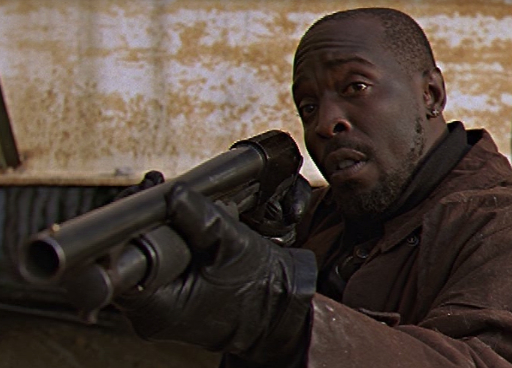
From the presentations in class, a lot of the groups talked about how violence in media has gone to an extreme and society's desensitivity to violence. Violence in media has reached a peak and is seen by all viewers no matter what age. It is so easily viewed because violence is not only portrayed on the big screen, but also on television on regular cable. Like people are being shot, tortured and beaten in some of the shows on television. Television shows that were brought up in the presentations were Breaking Bad, Justified and The Wire. All these television shows exemplify a mature level of violence through the actions of the main characters. The thing that all of these main characters have in common is that their actions create a blurred line between good in evil because of their reasons for them. For example, Raylan Givens from Justified is a sheriff that uses violence and killing to clean up his town from injustice.
This is common in media nowadays because it makes the character more interesting and dynamic, in both movies and television. One of the best things that I think media portrays is sexuality because of how open homosexuality is becoming now in today's world. It is making people more open to it and portrays same sex relations in a progressive manner. The worst thing that media is portraying is gun violence. Although it exists among us, the media makes it seem to show gun violence as a solution to a lot of issues. It causes people to really be on the line about guns and the safety behind them.
Children are becoming less fearful to weapon violence in general because of the portrayal of weapon violence in media. I really agree with most of the ideas of media's portrayal that was presented by all of the groups. I think the progression of media is reaching a peak and will begin to change depending on the social issues of the day as time goes on.

Friday, August 23, 2013

Hardest Decision of My Life

Yes, I have just made the hardest decision of my life. What was is it? Oh my top five favorite movies of all time (subject to change):

Number 5 on my list: The Harry Potter Series


Harry Potter I think should be on everyone’s top five or at least top ten. I know it is kind of nerdy and whatnot, but it has such a gripping storyline and would make you want to be at every 12 o’clock premier of the newest film to the series. Yes I did go to the premiers; no I did not go dressed in my Gryffindor cloak wielding a wand. The magic or CGI in Harry Potter really sold the magic that is portrayed in the book to complete the storyline. And then you really think of all the elements in the book and how they are a pieced together, I just think, “Man, what was J.K Rowling on to come up with something like this?”


Number 4 on my list: Django Unchained

Quentin Tarantino is a mastermind of resurrecting these cheesy, cliché 70’s films. Django Unchained is one of his newest additions to his reel. First of all the trailer looked so tight that I knew I had to see it. Especially the fact that I knew it was a Tarantino and I was bound to see some blood and gore. Again with every film, I really judge it based on it’s storyline to determine if it’s a good film or not. All the technical extras are just a plus. I thought that this storyline was so damn good. And especially cause DiCaprio was in it already made it a great film.  One of my favorite parts in the movie is where Jamie Foxx’s character kills 3 men who had brutally whipped his wife. I felt so much intensity right in this scene.


Number 3 on my list: Kids


Kids is an indie movie from the 90’s that was pretty popular because it was pitched towards the teenage viewers. What made this film so popular was it’s message about engaging in safe sexual intercourse. The dumb and naïve main character named, “Telly” is just like any other teenage boy and is trying to have sex with anything that moves. When one day one of his victims of flowering, comes to find out that she has been infected with HIV. The story comes off so scary because of how it really only takes one time to become infected with an STD and really makes teenagers think twice about having sex.


Number 2 on my list: This is the End

This new movie has erupted much stir because of how hysterical it is. I really think Judd Apatow is a genius in all films that he had written. What got me to really like this film is the dialogue and casting. The storyline was “ehhh” because apocalyptic films are kinda cheesy but the casting was amazing. Even though it was really only focused on 6 main characters, the guest appearances from Kevin Hart, Michael Cera, Rihanna and many more stars really completed the film. Also because everyone played themselves in the film too.


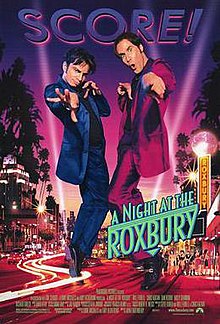
Number 1 on my list: A Night at the Roxbury


Oh maaaa gawwwd. This movie really is, and forever will be, my all time favorite. I swear I probably have seen it like a trillion times and I still think that it’s so funny. The character development and how the Butabi brothers progressed and regressed in the film is something that I really liked. I love the cheesy bromance and stupidity in both Chris Katan and Will Ferrell’s characters. They give the film like a modern slapstick comedy genre. The dialogue is what sells the film too because it one of the most quoted films I have ever seen. I swear I probably quote that film once a day.

Friday, August 16, 2013

What makes a great movie?


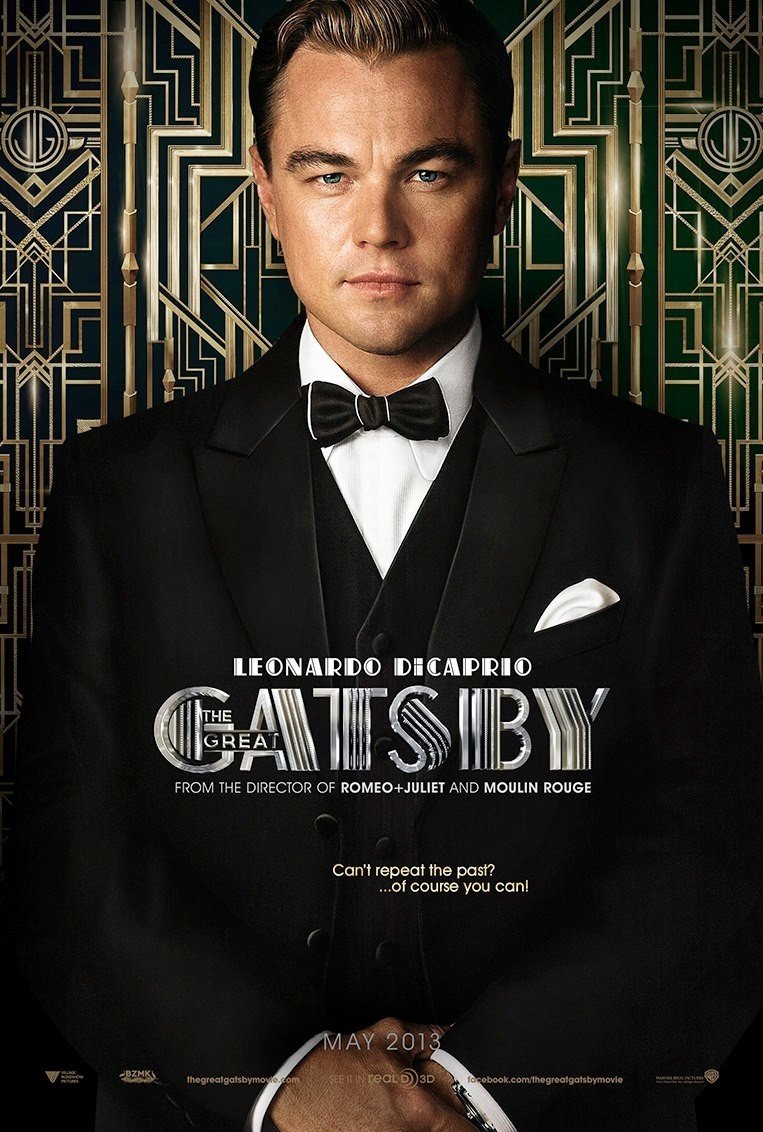
What makes a great movie? The opinion varies from person to person but what I think makes a great movie is a solid narrative, good character development and cinematography. A movie that I feel had all of theses characteristics was the movie The Great Gatsby (2013). The storyline comes straight from F. Scott Fitzgerald’s novel “The Great Gatsby.” What makes good narrative is a lot of interesting backstory and an almost seemless plot. Holes in a storyline is a common problem in films and I think because The Great Gatsby was based on a book, it had a few to none holes in it’s storyline.  The backstory in the film improved the character development of the two main characters, Nick Carraway and Jay Gatsby. They both were extremely dynamic characters and also flawed. Flawed characters are becoming more and more common in films because they gain the sympathy of the audience. Jay Gatsby for example is suffering from Obsessive Compulsive Disorder (OCD) and fathoms over the idea of him being married to woman named Daisy Buchannan and goes to extremes to get closer to her. Nick Carraway is a raging alcoholic. The cinematography in the film was really well done. But I also feel that a lot of the visuals were beautiful because of the CGI. Otherwise the cinematography was great.
One specific scene that had great cutting and angles was the scene when Nick Carraway walks into Gatsby’s party and sees all that has been going on.

What makes a great movie in my opinion is the narrative, character development and cinematography.

Tuesday, May 28, 2013

End of Year Reflection

Final Reflection
Independent Film Research
I feel my strengths in approaching the research is my knowledge of mis en scene and collective eye for things of that sort. Also, I took really good movie notes for both movies that really helped me have information to look back to and compare. I think I need more training with the format or correct way to write it. There were no specific way to write it and I think I need to organize my ideas better. My suggestion for next year would be that you could give more class time to work on this so we would be able to discuss it with you.

Oral Presentation Experience
My strengths in approaching the oral were that I picked a good scene to analyze with a lot of things within the scene that I could talk about. I feel I need to go deeper into what exactly I am analyzing  and bring up key points that are more below the surface. I talk mainly about what is on screen rather than what is behind the scene. I think we should do more of these to practice them or do more socratic seminars to bring up film speaking skills.

Production Experience
I feel that I really improved the quality of my work this year. I have learned to become more organized and consistent with making deadlines. A lot of more time was put into my film productions this year and taught myself to take care of a bigger workload. I feel I need to work on my story writing process because there always is a lot of wholes in my narratives with rough transitions. More advanced tutorials for the IB students would be nice to improve the skills and techniques for camera work and editing. Also maybe less blog posts at one time because sometimes it got overwhelming when you would assign three at a time.