Monday, October 21, 2013

Realism/Classical/Formalism

In this blog post, I shall go into depth about Realism, Classism and Formalism editing styles. I will provide and example for each of these editing styles.

Realism

Realism editing conventions consist of a series of sequence shots for a sequence edit. These are just shots that are recorded for a long and continuous time. This was used in the early stages of film in movies like Arrival of  a Train (1895) by the Lumiere Brothers. Realism preserved the a life like perspective in film because of the non-manipulation of time and space. It usually captures moments in life exactly how they are. The US, France and Britain began making narratives from this style of editing. The Quarantine series and Cloverfield are both films that are supposed to be shot continuously, from a place of view (POV) perspective. Obviously, these movies aren't real or filmed completely in one take, but it is a simulation or rip off of Realism editing. I think the editing style gives an interesting way to tell the narrative of both films. I would not recommend these films to anyone that is suffers from motion sickness. Here are clips from both movies below.


Classism

Classism editing style is when the manipulation of time and space was inputted into film by D.W. Griffith. This was called "Cutting to Continuity" because of the fluid transitions from shot to shot that make a sequence of shots seem all taken at the same time from different angles. This created a cause and effect relationship that sparked certain conventions of editing that were necessary control time and space. These conventions were screen direction, action, etc... Classical Cutting in films created emotions in the viewer by emphasizing certain details over others. An early use of Classism editing was exemplified in Birth of a Nation (1915) by D.W. Griffith. The use of Classical Cutting changed film and made narratives more complex in a way, but simple to follow. This silent epic, Birth of a Nation, really showed an early example of manipulating time and space. This film did have a few traits of Realism editing though also because of the long, stationary held shots.


Formalism

Formalism editing style is when time or space is altered and creates emotion that is not exactly tied to a linear narrative. A Soviet director, Pudovkin, created a theory that all shots individually should provoke a new feeling or emotion when juxtaposed, which was called the Kuleshov effect. Alfred Hitchcock gave a well explained example of the Kuleshov Effect. Juxtaposition in film made the audience interpret their own meaning of a certain series of shots with a somewhat, straight forward intention. An early example of formalism in film is the Odessa Steps Sequence in Battleship Potemkin (1925) by Eisenstein. Formalism exists today in most films and television shows. An example in the show Breaking Bad is when a close up of a boxcutter is in the frame and then it cuts to a shot Walt looking at the boxcutter. These shots provoke a certain feeling or emotion in the audience or viewer. These shots manipulate time and space and emulate a narrative that is easily followed without cutting "classically" from shot to shot.

Sunday, September 8, 2013

Contemporary Media Analysis


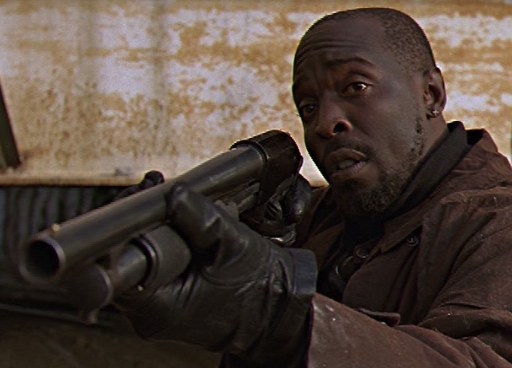
From the presentations in class, a lot of the groups talked about how violence in media has gone to an extreme and society's desensitivity to violence. Violence in media has reached a peak and is seen by all viewers no matter what age. It is so easily viewed because violence is not only portrayed on the big screen, but also on television on regular cable. Like people are being shot, tortured and beaten in some of the shows on television. Television shows that were brought up in the presentations were Breaking Bad, Justified and The Wire. All these television shows exemplify a mature level of violence through the actions of the main characters. The thing that all of these main characters have in common is that their actions create a blurred line between good in evil because of their reasons for them. For example, Raylan Givens from Justified is a sheriff that uses violence and killing to clean up his town from injustice.
This is common in media nowadays because it makes the character more interesting and dynamic, in both movies and television. One of the best things that I think media portrays is sexuality because of how open homosexuality is becoming now in today's world. It is making people more open to it and portrays same sex relations in a progressive manner. The worst thing that media is portraying is gun violence. Although it exists among us, the media makes it seem to show gun violence as a solution to a lot of issues. It causes people to really be on the line about guns and the safety behind them.
Children are becoming less fearful to weapon violence in general because of the portrayal of weapon violence in media. I really agree with most of the ideas of media's portrayal that was presented by all of the groups. I think the progression of media is reaching a peak and will begin to change depending on the social issues of the day as time goes on.

Friday, August 23, 2013

Hardest Decision of My Life

Yes, I have just made the hardest decision of my life. What was is it? Oh my top five favorite movies of all time (subject to change):

Number 5 on my list: The Harry Potter Series


Harry Potter I think should be on everyone’s top five or at least top ten. I know it is kind of nerdy and whatnot, but it has such a gripping storyline and would make you want to be at every 12 o’clock premier of the newest film to the series. Yes I did go to the premiers; no I did not go dressed in my Gryffindor cloak wielding a wand. The magic or CGI in Harry Potter really sold the magic that is portrayed in the book to complete the storyline. And then you really think of all the elements in the book and how they are a pieced together, I just think, “Man, what was J.K Rowling on to come up with something like this?”


Number 4 on my list: Django Unchained

Quentin Tarantino is a mastermind of resurrecting these cheesy, cliché 70’s films. Django Unchained is one of his newest additions to his reel. First of all the trailer looked so tight that I knew I had to see it. Especially the fact that I knew it was a Tarantino and I was bound to see some blood and gore. Again with every film, I really judge it based on it’s storyline to determine if it’s a good film or not. All the technical extras are just a plus. I thought that this storyline was so damn good. And especially cause DiCaprio was in it already made it a great film.  One of my favorite parts in the movie is where Jamie Foxx’s character kills 3 men who had brutally whipped his wife. I felt so much intensity right in this scene.


Number 3 on my list: Kids


Kids is an indie movie from the 90’s that was pretty popular because it was pitched towards the teenage viewers. What made this film so popular was it’s message about engaging in safe sexual intercourse. The dumb and naïve main character named, “Telly” is just like any other teenage boy and is trying to have sex with anything that moves. When one day one of his victims of flowering, comes to find out that she has been infected with HIV. The story comes off so scary because of how it really only takes one time to become infected with an STD and really makes teenagers think twice about having sex.


Number 2 on my list: This is the End

This new movie has erupted much stir because of how hysterical it is. I really think Judd Apatow is a genius in all films that he had written. What got me to really like this film is the dialogue and casting. The storyline was “ehhh” because apocalyptic films are kinda cheesy but the casting was amazing. Even though it was really only focused on 6 main characters, the guest appearances from Kevin Hart, Michael Cera, Rihanna and many more stars really completed the film. Also because everyone played themselves in the film too.


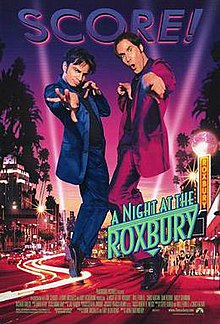
Number 1 on my list: A Night at the Roxbury


Oh maaaa gawwwd. This movie really is, and forever will be, my all time favorite. I swear I probably have seen it like a trillion times and I still think that it’s so funny. The character development and how the Butabi brothers progressed and regressed in the film is something that I really liked. I love the cheesy bromance and stupidity in both Chris Katan and Will Ferrell’s characters. They give the film like a modern slapstick comedy genre. The dialogue is what sells the film too because it one of the most quoted films I have ever seen. I swear I probably quote that film once a day.

Friday, August 16, 2013

What makes a great movie?


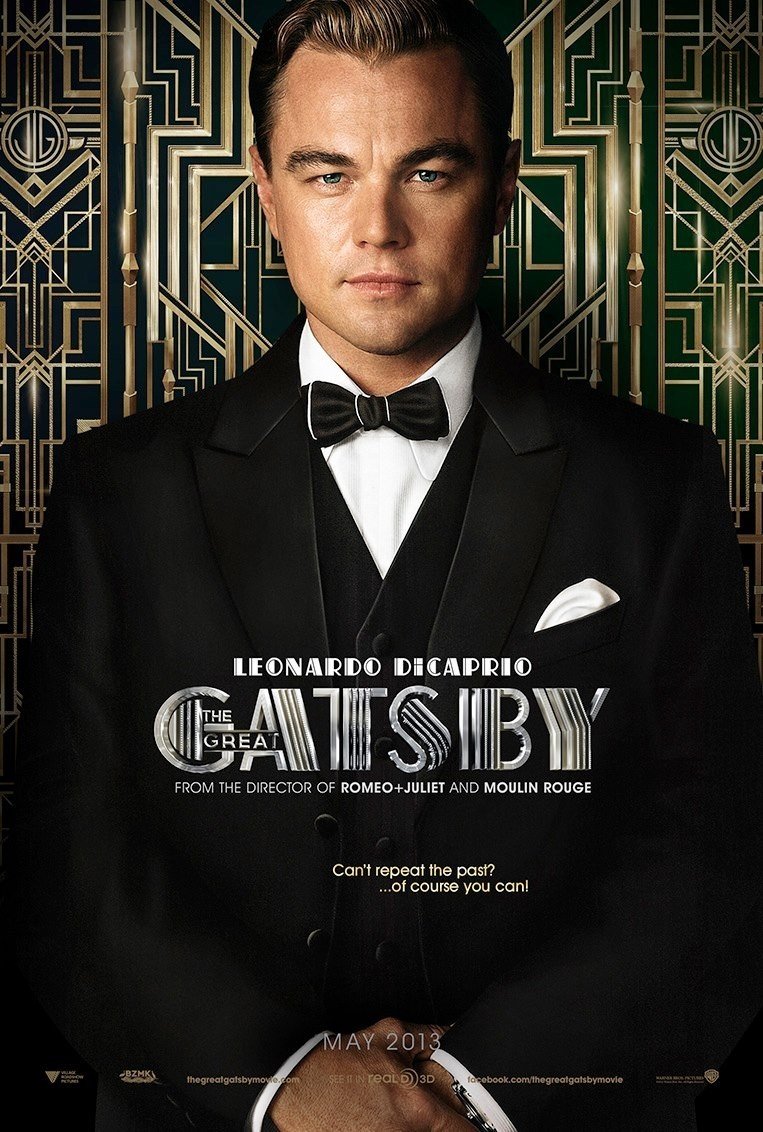
What makes a great movie? The opinion varies from person to person but what I think makes a great movie is a solid narrative, good character development and cinematography. A movie that I feel had all of theses characteristics was the movie The Great Gatsby (2013). The storyline comes straight from F. Scott Fitzgerald’s novel “The Great Gatsby.” What makes good narrative is a lot of interesting backstory and an almost seemless plot. Holes in a storyline is a common problem in films and I think because The Great Gatsby was based on a book, it had a few to none holes in it’s storyline.  The backstory in the film improved the character development of the two main characters, Nick Carraway and Jay Gatsby. They both were extremely dynamic characters and also flawed. Flawed characters are becoming more and more common in films because they gain the sympathy of the audience. Jay Gatsby for example is suffering from Obsessive Compulsive Disorder (OCD) and fathoms over the idea of him being married to woman named Daisy Buchannan and goes to extremes to get closer to her. Nick Carraway is a raging alcoholic. The cinematography in the film was really well done. But I also feel that a lot of the visuals were beautiful because of the CGI. Otherwise the cinematography was great.
One specific scene that had great cutting and angles was the scene when Nick Carraway walks into Gatsby’s party and sees all that has been going on.

What makes a great movie in my opinion is the narrative, character development and cinematography.

Tuesday, May 28, 2013

End of Year Reflection

Final Reflection
Independent Film Research
I feel my strengths in approaching the research is my knowledge of mis en scene and collective eye for things of that sort. Also, I took really good movie notes for both movies that really helped me have information to look back to and compare. I think I need more training with the format or correct way to write it. There were no specific way to write it and I think I need to organize my ideas better. My suggestion for next year would be that you could give more class time to work on this so we would be able to discuss it with you.

Oral Presentation Experience
My strengths in approaching the oral were that I picked a good scene to analyze with a lot of things within the scene that I could talk about. I feel I need to go deeper into what exactly I am analyzing  and bring up key points that are more below the surface. I talk mainly about what is on screen rather than what is behind the scene. I think we should do more of these to practice them or do more socratic seminars to bring up film speaking skills.

Production Experience
I feel that I really improved the quality of my work this year. I have learned to become more organized and consistent with making deadlines. A lot of more time was put into my film productions this year and taught myself to take care of a bigger workload. I feel I need to work on my story writing process because there always is a lot of wholes in my narratives with rough transitions. More advanced tutorials for the IB students would be nice to improve the skills and techniques for camera work and editing. Also maybe less blog posts at one time because sometimes it got overwhelming when you would assign three at a time.